What is Factory Acceptance Testing, and How is FAT Done | Carelabz.com
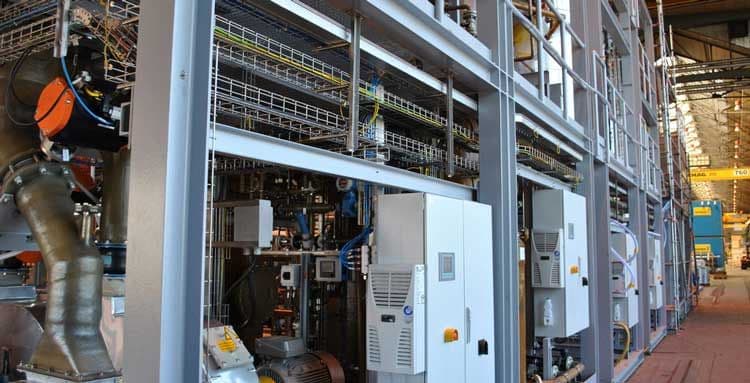
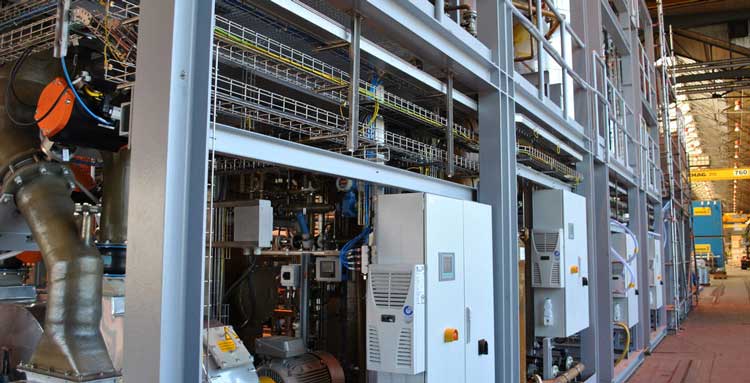
The Factory Acceptance Test (FAT) is a process that evaluates the equipment during and after the assembly process by verifying that it is built and operating in accordance with design specifications. FAT ensures that the components and controls are working properly according to the functionality of the equipment itself. As the name suggests, this testing is performed at the factory. FAT is typically conducted in order to assess any discrepancies and non-conformities, as well as develop a process for how they are to be handled. Deviations or abnormalities observed during testing are documented in a problem report and corrected prior to shipment. The FAT is a customized testing procedure for different types of systems and the tests are executed before the final installation at the plant. The FAT is not a requirement but recommended to be carried out, according to the standard IEC 61511, if the application software of the logic solver is fairly complex or if the architecture of the safety instrumented system is using redundant arrangements. FAT must be conducted in a thorough and forthright manner. A poor or rushed FAT can lead to missed non conformities, which can only then be corrected after the equipment is installed—which in turn can wreak havoc on a project schedule.
Why is Factory Acceptance Testing Required?
FATs are beneficial not just for the buyer and end users but for the manufacturer as well. Both parties can be assured that the equipment meets all the contractual specifications and any issues can be addressed before arriving at the customer’s site. Rectifying issues while the system is still in the possession of the manufacturer helps to keep the project on track and within budget. FATs almost always save time and money over fixing issues in the field. Our broad factory acceptance test is the most lucrative way to ensure that your equipment or plant operates correctly. As a highly qualified, independent third-party, we have the trusted skills and resources to perform steadfast testing. Alternatively, we can witness appropriate testing on your behalf. In many cases it is difficult to predict the correct operation of the safety instrumented system or consequences due to failures in some parts of the safety instrumented system. For that reason the FAT is a valuable check of the safety issues. The safety of your employees is always a top concern so the quality assurance gives you the peace of mind that all components of your system are functioning the way they should, and within the full range of operating specifications.
Factory Acceptance Test Helps You to:
- Achieve independent proof of functionality, quality and integrity with our comprehensive checking process
- Verify all important documents, such as manuals, instructions, plans, drawings, piping and instrumentation diagrams (P&IDs)
- Ensure that your equipment or plant performs as expected under the testable range of likely conditions, including mishandling and error
What are the Process in Factory Acceptance Testing?
The main objective of the FAT is to test the safety instrumented system (logic solver and associated software together). The tests are normally executed during the final part of the design and engineering phase before the final installation at the plant. The FAT is a customized procedure of checking the safety instrumented system and the safety instrumented functions according to the safety requirements specification.
The FAT includes appropriate general testing procedures for verification of the correct operation of the safety instrumented system. Since the testing activities are general methods the FAT is applicable to programmable or non-programmable safety instrumented systems. The most important part of the FAT addresses specification of the test cases i.e. clear description of the test cases, well-structured test procedures and relevant test cases.
It’s important to note here that there are varying levels of an FAT. They can be performed at a very basic level, such as setting up the main pieces of the system with temporary wiring and making sure everything moves as it is supposed to, or a more complete FAT can be conducted where the manufacturer physically builds the whole system in their shop to test it fully. In the latter example, the system is then taken apart, moved to the customer’s site, and put back together again.
The FAT is normally performed at the manufacturer work shop. The manufacturer checks that the safety instrumented system works as intended and according to the requirements stated in the safety system works as intended and according to the requirements the safety requirements specification, NRN. During the FAT the manufacturer checks:
- The used equipment are mending to the specification eg, compatible HW and SW versions
- The used equipment are installed according to manufacturer’s specification
- The input and the outputs are connected according to the drawings
- The calibration of the equipment are correct
- The trip points operate according to the requirements in the SRS.
- The associated software operate according to the requirements in the SRS the outputs and their actions behave according to the SRS
- The reset functions operate according to the SRS
- The alarms operate according to the SRS
- The operator functions operate according to the SRS
- The bypass functions operate according to the SRS
- The manual shutdown functions operate according to the SRS
- The diagnostic alarm functions operate according to the SRS
The outputs from the safety instrumented function are examined during different test cases e.g. simulation of inputs in order to verity that the safety instrumented functions meet the requirements in the safety requirements specification. The FAT reveals weaknesses in the design and engineering phase or in the safety requirement specification phase these phases have to be modified according to the result of the FAT. In order to check the modifications the safety instrumented system has to be re- tested.
Following are the points to remember while conducting FAT
Provide a detailed test plan. The FAT is the time to discover failures or issues, determine reliability, verify efficiencies, and explore how the machine should handle failures. The test plan should be prepared up front and submitted to the supplier as part of the Request for Quote (RFQ). The machine will not perform as expected if the criteria aren’t specified; neither will performance be competently assessed. Clearly state in the contract all the responsibilities, accountabilities, and deliverables, in a measurable way. These must be quantifiable and agreed upon to eliminate finger-pointing. Doing so makes it easier for all parties by eliminating second-guessing. Specify how long the machine should be dry-cycled; 24 hours minimum is recommended. Specify how many packages should be produced and at what speed. Specify disposal plans for finished packages. Although you’ll pay for the FAT, most equipment suppliers will agree to a provision that if the machine fails, any subsequent test is free. Having a detailed test plan will help ensure that you don’t short-change the FAT. Performing a brief, shallow FAT will inevitably show up as a problem in the third shift, nine months down the road.
Push the envelope, but use the right materials as well. In the FAT, use the materials that will be put in operation during actual production. Not using them may compromise test validity. You can stretch the system with noncompliant materials and processes to better understand operational flexibility (wildcard testing), but the most important results will be those gleaned from using the materials you actually employ in your process.
Engage the operators and technicians. Focus on the personnel who will ultimately be responsible for running the machines, those who “own the line.” Sending engineers isn’t sufficient; the operators will see what makes the most sense on the line. The people who will run the equipment daily are uniquely qualified to make observations beyond the specifications and recognize issues or flaws prior to delivery. Additionally, the ownership aspect is invaluable, as the best technology going into a plant is not going to work if the operators are not comfortable with it, or have no faith in it. Engaging the production team early in the process is one of the most important aspects of new equipment design. Be smart about training. If training is provided as part of the FAT, make sure the people being trained are those who will run the line, not the engineers. Train and educate the right people.
Create and follow a detailed “failure script.” Make an inventory of the type of failures that you’ve experienced or might experience in production, as well as expected outcomes. Use this checklist to fully assess machine performance during the FAT. Machines have a natural backup curve that is all about early failures. Running, even dry running, is very critical; you can find leakage, electronic failures, and more, and then make sensible engineering changes. You can’t reap the benefits of testing if you don’t do the testing. Changes made at the FAT stage are the least-expensive ones; many times you don’t even pay for them.
Test parts replacement and changeover procedures. Test how long it takes to replace the most common wear parts. Determine how to remove a defective part and document the process in an easy-to-use format such as a One Point Lesson (OPL). Using your technicians and operators at the FAT, practice changeovers, and start-up and shut-down protocols. See where the users encounter difficulty and elicit their input and ideas. Leverage the opportunity to modify the equipment, standardize the procedures, and document in an OPL format with numerous pictures.
Check safety with a keen eye. Complete a review of the equipment from a safety perspective. Look for poorly guarded areas and pinch points. Run your hands across the machine (carefully), looking for sharp edges and burrs. Test to ensure all limit switches and emergency stops are fully functional, robust, and appropriately placed. Test for flaws in all built in safety components. Are there any safety options missing? Is making the machine LOTO (Lockout/Tagout) easy, or are there unexpected sources of energy that could cause injury? (Lockout/Tagout refers to the act of disabling all sources of energy such as electricity and compressed air while physically locking down the machine so that it doesn’t cause injury due to movement while the machine is being worked on.)
Take your time. Take your time on the FAT, especially with highly customized machines. Why would you take a million-dollar project and squeeze the FAT into a six-hour window? Don’t worry about relatively small expenses. Some testing will be more challenging than others. For example, high-speed testing can be difficult due to the sheer volume of product needed for the test. Never trade away adequate factory testing to meet a shipping deadline. You will ultimately pay the price for this in longer start-ups and lost productivity at the factory.
Get a good integrator. This is key. Tie into other equipment suppliers; test everything together. Sometimes it’s worth the money to run everything together on the integrator’s floor. It costs money, but saves it in the long run. Get as much of the peripheral equipment together on the same floor at the same time as soon as you can. Test as much as you can. You can never over-test equipment reliability and range of operation.
Work with your supplier, and your supplier will work with you. A successful FAT is in both parties’ interest. Not all (or many) machinery suppliers have factories set up to perform a well-rounded FAT for customers. Some will build or mock up complete systems, but duplicating a customer’s process can be very difficult and expensive. Suppliers may be able to prove to the end user that their machine can perform in the manner desired during pre-sales (or pre-PO) product-testing procedures. Once customers are satisfied that equipment can do what they want it to do, POs are issued. Increasingly, customers are simply looking for a video testimonial that the machine actually runs before it leaves the supplier’s facility, in lieu of a FAT. That being said, savvy customers will continue to demand FATs and training in a supplier’s facility before the machine ships. Some suppliers are expanding their facilities to include more FAT handling, in a private, secure environment, where strict confidentiality of all technologies is assured.
Know the difference between a Factory and Site Acceptance Test. One of the biggest areas of confusion surrounding the FAT is over whether it should simulate how the machine responds under actual factory conditions. In fact, that is the purpose of the Site Acceptance Test (SAT). In the machinery builder’s plant, it may be difficult or even impossible to simulate both the production volume and the conditions of your product, especially for more than a few minutes. This is especially true if the product will be packed at a certain temperature, or has a certain consistency or rate of speed coming out of production. Much time, energy, and money has been spent in vain trying to address “failures” in the machine builder’s plant, only to find that the machine works perfectly once in production at the customer’s plant. The purpose of the FAT is to verify the desired functionality of the machine. On acceptance of a FAT, you’ll be looking for items such as:
Completed FAT protocol.
- Maintenance and users’ manuals
- Easy-to-use training materials (OPLs, videos, etc.)
- Standard work procedures
- Standard maintenance procedures
- Recommended spare parts lists
- Certificates of compliance
- As-built technical drawings (electrical, mechanical, pneumatic, and process schemes)
- Materials certificates and data sheets
- Main equipment data sheets
- Instruments calibration certificates
- Welding processes qualifications
How to get an Effective Result from Factory Acceptance Testing?
Preparation is key to getting the most out of a FAT. Here are a few of the tips you can use to set your stretch wrapper FAT up to deliver the greatest benefit.
- Use the right materials. In the FAT, use the materials that will be put in operation during actual production. Not using them may compromise test validity. With stretch wrappers, specifically, providing the film that will be used in production is also a key component as the gauge & quality of the film has a significant impact on how the machine is set up and its overall performance.
- Engage the operators and technicians. Focus on the personnel who will ultimately be responsible for running the machines, those who “own the line.” Sending engineers isn’t sufficient; the operators will see what makes the most sense on the line.
- Be smart about training. If training is provided as part of the FAT, make sure the people being trained are those who will run the line, not the engineers. Train and educate the right people.
- Create and follow a detailed “failure script.” Make an inventory of the type of failures you might experience in production, as well as expected outcomes. Use this checklist to fully assess machine performance during the FAT.
- Check safety with a keen eye. Complete a review of the equipment from a safety perspective. Look for poorly guarded areas and pinch points.
How to Conduct Factory Acceptance Testing?
There are several components that make up FAT. The product must be assembled, prepared, and connected to utilities for testing. Documentation such as drawings, ASME certificates, and test procedures must be gathered. And finally, testing must be conducted in the factory that follows specific test procedures. Before the FAT begins, the manufacturer should present the FAT procedure to the client for review and approval. The procedure should include testing of as much functionality as is practical in the factory and, where possible, should show pass/fail criteria or desired results for each item tested. Once the procedure is approved, the manufacturer should test the equipment before the FAT begins. Keep in mind that some clients like to visit the factory during FAT, so this “pre-test” will confirm that the sterilizer is set up with the correct options, ensure a smoother FAT process and minimize down-time during the FAT.
Step 1: Process done before FAT (Pre-FAT):
A pre-planning is necessary for an efficient FAT. The planning presents a set op of the appropriate tests to be carried out and who is responsible for developing the test cases. Appropriate levels of competence and independence of assessors are required. The realization of tests shall be described as well as the personnel responsible to carry out the test. The test protocol is developed during the planning and furthermore who is responsible to attest the test protocol. The procedures to carry out the FAT shall be well defined and documented in a proper way. Each test procedure shall be described in a logical sequence i.e. How to test the application software and hardware. The needed competence for involved test personnel is described during the planning. It is recommended that personnel with experience suitable for the intended process application and safety instrumented system deals with the FAT planning.
- The testing included in a FAT procedure should be largely derived from the performance criteria defined in the Functional Requirements Document (FRD), which is created by the project team early in the project planning process. The FRD should be the focal point for discussions when interviewing potential system integrators and should be included in the contract/purchase order package. These requirements should, therefore, be well known and understood well before time to develop the actual FAT protocol.
- The system integrator/dealer should prepare and submit a FAT procedure well in advance of the FAT. This procedure should be reviewed and approved by the system owner/project manager. It should attempt to include testing of as much functionality as is practical in the factory, and check of all interfaces among equipment and systems. Where possible the procedure should show pass/fail criteria or desired results for each item.
- The dealer should also provide a schedule for the FAT showing all timing and sequence of testing.
- Prior to FAT all design approvals should be complete. This is to remove technical ambiguity from the FAT and prevent disputes over work that continues after FAT.
- The dealer should prepare a test facility that can be effectively used to conduct the FAT testing, including calibrated test equipment and any special test equipment.
- The dealer should compile a document set that can support the testing and serve as a reference for the test results, including:
- Contract specifications and copies of all references called out in the specification.
- All drawings for the project, including drawings received from other vendors that describe interfaces.
- Detailed testing check list, including pass/fail criteria.
- The dealer is to pretest the system before FAT. Failure to do this can result in wasted time during FAT, and potentially a prolonged extension of FAT while fixes are effected.
- If the system in question is large enough to impact the system owner’s facilities, laboratory layout or utilities or if there are any questions regarding moving the system into the owner’s facility, it is highly recommended that a person responsible for the owner’s physical plant/facility be invited to attend FAT.
Step 2: Process done during FAT
- Review the specification line by line while checking the equipment or drawings for compliance with the specification, including any change orders.
- Inspect for workmanship Inspect for problems that can occur during installation or use of the equipment, for example, lifting points and safe access to components for maintenance, etc.
- Test of the equipment per the dealer’s approved procedure; these should include functionality testing and regulatory testing. Ad hoc testing may be required to define any major non-conformities revealed by testing.
- Note the software and firmware versions in the equipment being tested.
Factory Acceptance Test Result
All the test cases of the FAT shall be explained in the documentation and furthermore if the objectives and criteria of the tests have been met or not. Exposed failures during the test are documented and the causes for the failures are also documented supported by essential actions to correct the failures. If there are modifications of the safety instrumented system it is necessary to carry out a safety analysis in order to determine if the safety is affected and if re-testing is necessary.
Step 3: Processes done after Factory Acceptance Testing
- Check of documentation
- Confirm vendor’s/dealer’s schedule for completing all documentation.
Benefits of Factory Acceptance Testing
- Customers can “touch and feel” the equipment while it is in operational mode before it ships.
- The manufacturer can provide some initial hands on training to the customer, giving operating personnel more confidence when running the machinery for the first time in real-world settings.
- Key project people from both sides are together, making it an ideal time to review the bill of materials, discuss required and recommended spare parts (for start-up and first year of operation) and review maintenance procedures and equipment limitations.
- The thorough FAT documentation can be used as a template for the Installation Qualification portion of the validated process/installation.
- Based on the results of the FAT, both parties can create a punch list of additional items that need to be addressed prior to shipment.
FAQ
Common Questions
Why is Factory Acceptance Testing Required?
FATs are beneficial not just for the buyer and end users but for the manufacturer as well. Both parties can be assured that the equipment meets all the contractual specifications and any issues can be addressed before arriving at the customer’s site. Rectifying issues while the system is still in.
What are the Process in Factory Acceptance Testing?
The main objective of the FAT is to test the safety instrumented system (logic solver and associated software together). The tests are normally executed during the final part of the design and engineering phase before the final installation at the plant. The FAT is a customized procedure of checkin.
How to get an Effective Result from Factory Acceptance Testing?
Preparation is key to getting the most out of a FAT. Here are a few of the tips you can use to set your stretch wrapper FAT up to deliver the greatest benefit. 1. Use the right materials. In the FAT, use the materials that will be put in operation during actual production. Not using them may compr.
How to Conduct Factory Acceptance Testing?
There are several components that make up FAT. The product must be assembled, prepared, and connected to utilities for testing. Documentation such as drawings, ASME certificates, and test procedures must be gathered. And finally, testing must be conducted in the factory that follows specific test p.
Get Started
Need expert support?
Carelabs delivers arc flash studies, power system analysis, and DEWA compliance services across the UAE.