Important Things About Arc Flash Hazard Study & Analysis
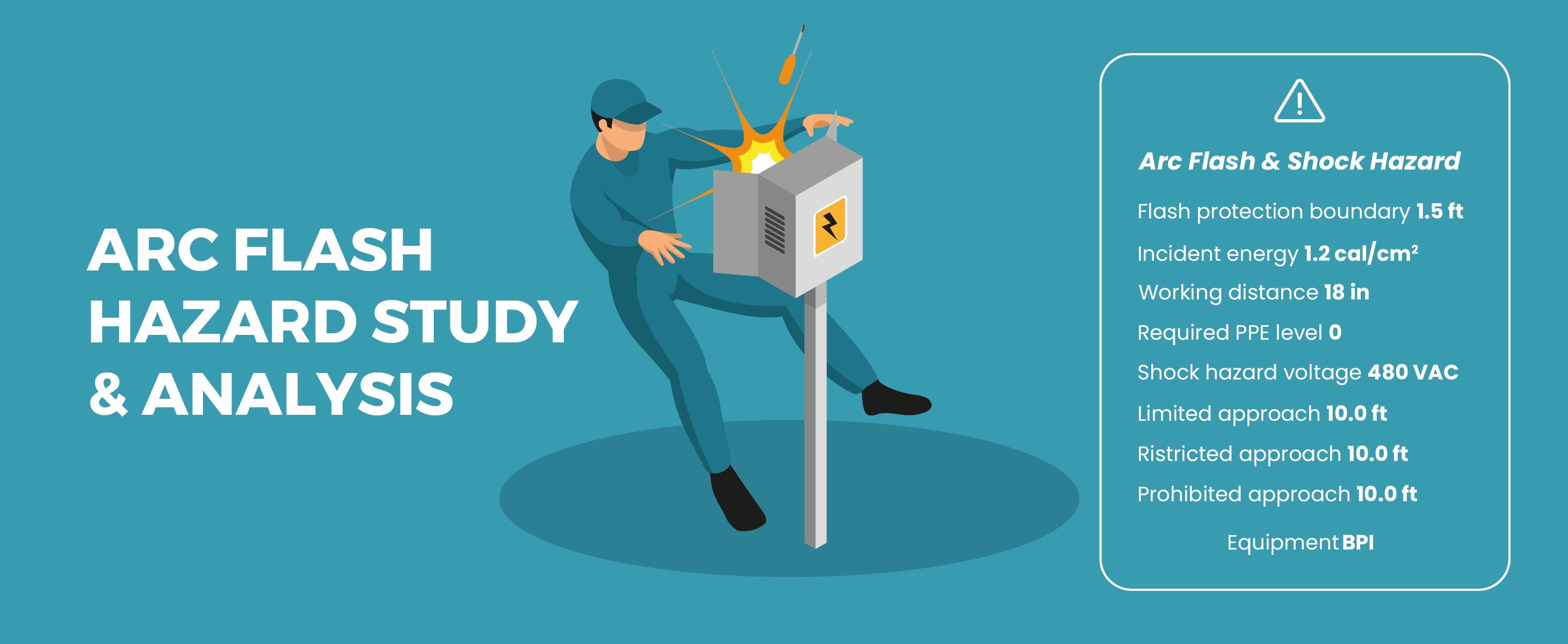
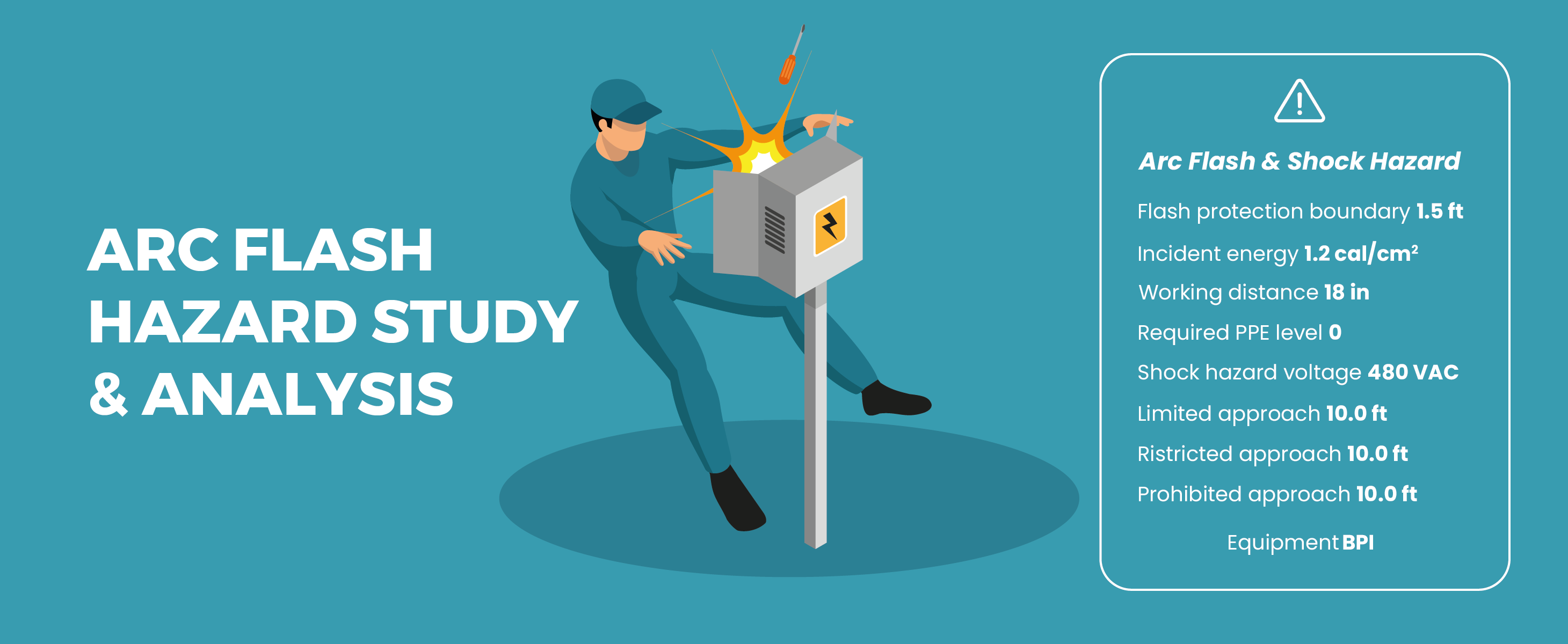
Arc flash study came into the picture ten years ago when IEEE 1584, known as “IEEE Guide for Performing Arc Flash Hazard Calculations,” was first introduced. This landmark document defines equations and methods that have become key components of the arc flash study.
In order to identify the specific arc flash hazard at a given piece of equipment within a facility, an arc flash study must be performed. There are several software packages available like ETAP, similar to short circuit study and coordination study software packages, to facilitate this analysis by a qualified professional electrical engineer.
An arc flash hazard study is a complicated engineering survey and analysis that typically is performed by an engineering consultant. Preparing for the study in advance can make the process much easier and more accurate. Although an arc flash study can be time-consuming, a correctly executed study can help improve plant safety by identifying where the most dangerous hazards are located and whether or not safety can be improved.
An electric arc is a luminous bridge formed in a gap between two electrodes. An Arc Flash occurs during a fault, or short circuit condition, which passes through this arc gap. The Arc Flash can be initiated through accidental contact, equipment that is underrated for the available short circuit current, contamination or tracking over insulated surfaces, deterioration or corrosion of equipment and, or parts, as well as other causes. An Arc Flash event can expel large amounts of deadly energy. The arc causes an ionization of the air, and arc flash temperatures can reach as high as 35,000 degrees Fahrenheit. This is hotter than the surface of the sun.
This kind of temperature can set fire to clothing and severely burn human skin in fractions of a second at a significant distance from the event. The heat can also result in the ignition of any nearby combustible materials. Arc Flash temperatures can also liquefy or vaporize metal parts in the vicinity of the event such as copper, aluminum conductors, or steel equipment parts. This material rapidly expands in volume as it changes state from a solid to vapor, resulting in explosive pressure and sound waves. The pressure wave can knock workers off balance or off ladders and even throw them across the room against walls or other equipment
Why Arc Flash Study and Analysis is Important?
Those involved with the design, implantation, and evaluation of electrical distribution systems must have an understanding of arc flash hazards and how to evaluate the hazards as well as minimize or mitigate the arc flash hazard to the electrical worker. In order to perform the arc flash study a short circuit and relay coordination study must first be performed or the results of these studies must be available to the engineer performing the arc flash study. At Carelabs, we use the tested and proven software ETAP to perform short circuit studies, relay coordination studies, and arc flash studies.
The result of the arc flash analysis will categorize the hazard at specific equipment based on the incident energy, as well as identify the Arc Flash Protection Boundary (this is the closest approach allowed before PPE must be worn). Inside the Arc Flash Protection Boundary, a worker must be wearing the proper clothing, or Personal Protective Equipment (PPE). The main objective of the PPE is to limit the burns to the body resulting from an arc flash event, to a survivable level. (i.e. .2nd degree or less).
Carelabs provides complete arc flash engineering studies by performing a full, on-site assessment, arc flash modeling, equipment evaluation relative to the fault current, and clearing coordination of your system with detailed one-line electrical model drawings.
We offer excellent services and will support your site team, local electrical contractor, or engineering firm with any services you need. Our expertise is widely recognized in the industry and our engineers are members of IEEE, NFPA, and IEC which set the standards for arc flash studies. We can provide arc flash studies using the latest ETAP software.
Tailored results by Carelabs allow you to reduce the cost of the services you need without paying for those you don’t need. We specialize in achieving fulfillment without excessive data and reports. These assessments are based on NFPA 70E, IEEE 1584, and NESC. Studies can be customized to include any and all of the following:
- Fault current and coordination analysis
- Personal Protective Equipment (PPE) Level recommendations
- Arc Flash Equipment Labelling
- Arc Flash Incident Energy Mitigation Strategies
- Written Electrical Safety Programs
There are two factors that have made the arc flash study focus:
- A greater understanding of arc flash hazards, and the risks they pose to personnel. Research into arc flash and arc blasts has begun to quantify the powerful forces they unleash.
- Increased vigilance on the part of OSHA. OSHA is using the requirements of NFPA 70E, the industry’s consensus standard for electrical safety, to judge whether the employer “acted reasonably” in protecting its workers from arc flash hazards. Noncompliance can result in substantial fines to employers.
When is Arc Flash Hazard Study & Analysis Needed
- Arc Flash Analysis has not been performed in the past three years.
- Short-circuit, protective coordination studies have not been performed in the past five years.
- Changes have occurred to the electrical distribution system or electrical utility system.
- A safety audit is required or the facilities insurance policy is up for renewal.
- Modifications or expansions of the electrical distribution system are being considered.
What are the Processes Involved in Arc Flash Analysis?
Working within NFPA and IEEE guidelines, our experienced power systems engineers will perform an accurate systematic Arc Flash Hazard Study and analysis as follows:
- Short Circuit Calculations – ETS will either use your data or gather the data to make calculations for you to identify bolted and arcing fault levels at key points in a power distribution system.
- Protective Device Coordination – ETS can perform an electrical systems coordination study or use the customer’s study, to determine the duration of the arcing faults.
- Arc Flash Hazard Calculations – The incident energy level, the flash hazard boundary, and the PPE required are then calculated for each location.
- Documentation – The information above is compiled for you into a comprehensive report, which contains information necessary to comply with regulatory requirements.
- Unsafe Work Locations – The report will identify work locations having incident energy level in excess of available PPE ratings.
- Arc Flash Hazard Mitigation – Recommendations will be made to minimize Arc Flash Hazards by changes in system protection or operational procedures.
- Arc Flash Hazard Labels – In addition to the report, our customers will receive a field label containing the flash hazard boundary distance, incident energy level, and PPE category and shock category and shock hazard for each location.
Why is PPE Important?
Even where engineering controls and safe systems of work have been applied, some hazards might remain. These include injuries to:
- The lungs, from breathing in contaminated air
- The head and feet, from falling materials
- The eyes, from flying particles or splashes of corrosive liquids
- The skin, from contact with corrosive materials
- The body, from extremes of heat or cold
The purpose of personal protective equipment (PPE) is to protect individuals, exposed to health and safety hazards, from the risk of injury by creating a barrier against workplace hazards.
When selecting and using PPE:
- Choose products that are CE marked in accordance with the Personal Protective Equipment Regulations 2002 – suppliers can advise you.
- Choose equipment that suits the user – consider the size, fit, and weight of the PPE. If the users help choose it, they will be more likely to use it.
- If more than one item of PPE is worn at the same time, make sure they can be used together, for example wearing safety glasses may disturb the seal of a respirator, causing air leaks.
- Instruct and train people how to use it, example train people to remove gloves without contaminating their skin. Tell them why it is needed, when to use it, and what its limitations are.
In order to correctly apply the NFPA 70E Hazard/Risk Category task tables, knowledge of the available short circuit current and the opening time of the overcurrent protective device is required.
The IEEE 1584 method is a systematic approach that calculates the exact arc flash energies from the electrical power system parameters. Carelabs services recommend a complete data collection from the power system in order to generate short circuit and coordination studies in addition to arc flash energy calculations.
How do we Conduct an Arc Flash Hazard Study and Analysis?
The arc flash hazard study involves the following steps
Step 1: Data Collection
The initial steps are data collection and determining modes of operation. To perform an arc flash hazard analysis, data is collected about the facility’s power distribution system. The data includes the arrangement of components on a one-line drawing (These are simplified drawings that show items such as circuit breakers, conductors, and power sources) with nameplate specifications of every device. Also required are details of the lengths and cross-section area of all cables. The utility should be contacted for information including the minimum and maximum fault currents that can be expected at the entrance. The modes of operation are used to study worst-case scenarios that may lead to arc flash, such as operations with circuit breakers open or closed or with certain motors or generators running or not running.
Accurate electrical system drawings are necessary to identify power sources, voltage levels, electrical equipment, and protective devices. If you already have one-line diagrams, we will update the data and work from them, if possible
Qualified staff must gather data from all applicable electrical equipment. Required information includes:
- Data from the utility, including available fault current, operating voltage, and specifics regarding the utility’s protective equipment at the point of service.
- Specifics for each protective device in the electrical system, including manufacturer, model, available time/current settings, and short-circuit interrupting rating.
- Transformer impedance, tap settings, and ratings.
- Conductor specifics, including lengths, sizes, and types of all overhead lines, and buses.
Step 2: Engineering Analysis of the Data
Once the data has been collected, a short circuit analysis followed by a coordination study should be performed. The resultant data can then be fed into the equations described by either NFPA 70E-2000 or IEEE Standard 1584-2002. These equations will produce the necessary flash protection boundary distances and incident energy to determine the minimum PPE requirement.
A short circuit study is required to determine the magnitude of current flowing throughout the power system at critical points at various time intervals after a “fault” occurs. These calculations will be used to determine the bolted fault current, which is essential for the calculation of incident energy and interrupting ratings of your equipment. A bolted fault current occurs as a result of two conductors becoming joined together. The bolted fault and the arc fault currents are calculated with the use of the data from previous steps. Comparison of equipment ratings with calculated short circuit and operating conditions will identify underrated equipment.
Step 3: Protective Device Coordination
Once the data is prepared and a flash hazard analysis has been performed, most likely it will be discovered that category 4 PPE will be required in most places. This is most unfortunate as this type of PPE is very unwieldy and could be costly in terms of time taken to perform work and the potential for mistakes. Prior to the new arc flash regulations, coordination studies were targeted at reliability with all settings adjusted towards the high side. Compliance with the new arc flash regulations means that not only does the coordination study need to be more accurate but it also needs to take into account the fact that the arc fault current is less than the bolted fault current. Protective device coordination should be performed to ensure selection and arrangement of protective devices limit the effects of an overcurrent situation to the smallest area. Results will be used to make recommendations for mitigation of arc flash hazards. Although this is an optional study, arc flash mitigation cannot be performed without completing this step. We perform this study in accordance with IEEE Std.
Step 4: Arc Flash Calculations
In this step, we determine incident energies and flash protection boundaries, respectively, for all equipment. The incident energy is the energy needed for an arc flash to cause second-degree burns. The flash protection boundary is specified as the distance where the incident energy or second-degree burns are caused. These calculations are based on available short circuit current, protective device clearing time and distance from the arc. Calculations of incident energy levels and flash protection boundaries will be completed for all relevant equipment busses.
Step 5: Reporting
Upon completion of the calculations, we will prepare your Arc Flash Report. This will be supplied to you for a short review period, during which your team can review mitigation recommendations. At this point, we can hold a Management Summary meeting to interpret the report results. Upon approval, we will provide a final report and full-sized one-line diagrams, stamped by our Registered PE. The drawings and report will also be supplied to you in a digital format.
Step 6: Label Installation
We will generate and install arc flash warning labels. These labels identify incident energy and working distance, nominal system voltage, and the arc flash boundary. In addition to standard requirements, our labels also include Limited, Restricted, and Prohibited approach boundaries, date, upstream protective device, and recommended personal protection equipment. We can also provide bolted fault current if desired
Who Needs Arc Flash Analysis?
Most commercial, institutional, and industrial electrical systems have arc flash hazards. OSHA requires that those systems be individually analyzed and, if hazards exist, labeled to identify the arc flash boundary. This will increase personnel safety, reduce shock hazards, and reduce arc flash injuries.
Carelabs is an authorized provider of Electrical Installation Study, Analysis, Inspection, and Certification services in UAE, and offer arc flash study and analysis services.
FAQ
Common Questions
What is an Electric Arc?
An electric arc is a luminous bridge formed in a gap between two electrodes. An Arc Flash occurs during a fault, or short circuit condition, which passes through this arc gap. The Arc Flash can be initiated through accidental contact, equipment that is underrated for the available short circuit cur.
Why Arc Flash Study and Analysis is Important?
Those involved with the design, implantation, and evaluation of electrical distribution systems must have an understanding of arc flash hazards and how to evaluate the hazards as well as minimize or mitigate the arc flash hazard to the electrical worker. In order to perform the arc flash study a sh.
What are the Processes Involved in Arc Flash Analysis?
Working within NFPA and IEEE guidelines, our experienced power systems engineers will perform an accurate systematic Arc Flash Hazard Study and analysis as follows: 1. Short Circuit Calculations – ETS will either use your data or gather the data to make calculations for you to identify bol.
Why is PPE Important?
Even where engineering controls and safe systems of work have been applied, some hazards might remain. These include injuries to: * The lungs, from breathing in contaminated air * The head and feet, from falling materials * The eyes, from flying particles or splashes of corrosive liquids * The.
How do we Conduct an Arc Flash Hazard Study and Analysis?
The arc flash hazard study involves the following steps
Get Started
Need expert support?
Carelabs delivers arc flash studies, power system analysis, and DEWA compliance services across the UAE.